
What I Wish Every Client KnewBefore Hiring an Interior Designer

By the time most people call a designer, they have already made several decisions that are harder to undo than they realize. The contractor has been chosen. The architect's drawings are done. Sometimes permits have already been submitted. And nobody thought to ask whether the automatic window treatments they love require electrical in every window frame, or whether the lighting they saved on Instagram needs to be roughed in before the drywall goes up. Some clients fall in love with a room they saw online and never realize it had twelve-foot ceilings and theirs are eight, and sometimes they just need someone to be straight with them about that.
The projects that go best are almost always the ones where the client understood what they were walking into. In this post we cover what a designer actually does, how the renovation team fits together, when to bring a designer in and why it matters, what working relationships actually look like, and how to choose the right person for your project.
Before we get into the designer's role specifically, a quick look at who is typically on a renovation team and what each person is responsible for.
If you're still in the early thinking stage, my free No-Fail 10-Step Home Design Checklist is a good place to begin.
(It opens in a new tab so you won't lose your place.)
Your Renovation Team: Architect, Designer, and Contractor Explained
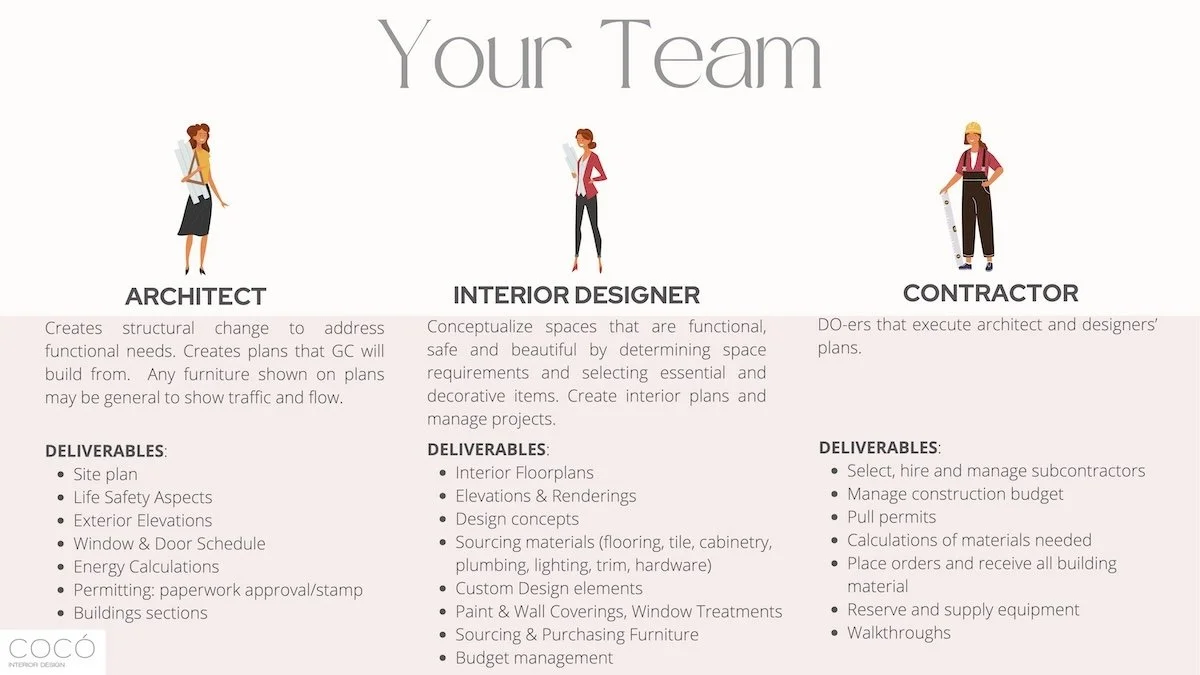
Not every project requires the same team. Smaller renovations may not need an architect at all. But for projects involving structural changes, permits, or significant scope, you are generally working with three people.
Your architect handles structural changes and creates the plans your contractor builds from. Their drawings are the legal and technical foundation of your project.
Your interior designer ideally contributes ideas to those plans before they are finalized, then works from them to make the space functional, cohesive, and beautiful. Depending on the engagement, that can mean everything from full material sourcing and furniture purchasing to a focused consultation on layout and key decisions. You define the scope together upfront.
Your contractor executes. They build what the architect and designer have planned, manage subcontractors, handle construction logistics, and bring real-world knowledge of what is actually buildable within your timeline and budget. In many projects, particularly those that do not require an architect, the contractor also manages the permit process directly.
When these players are aligned and communicating before demo day, projects move. When they are not, that is where delays and costly surprises accumulate.
What Does an Interior Designer Actually Do?
People often come to me with saved images on Instagram and a strong sense of what they love visually. That is a wonderful starting point. But plenty of clients arrive having never looked at an inspiration image in their lives. They just know they hate what they have, or that something in their home has never felt right, and they cannot quite name what they want instead. Both of those clients need a designer. They just need one for different reasons.
For the client who comes in with ideas, a designer helps translate those ideas into something buildable, cohesive, and suited to how they actually live. For the client who comes in with nothing but a vague sense of dissatisfaction, a designer asks the right questions, helps them discover what they care about, and suggests possibilities they never would have thought to look for on their own.
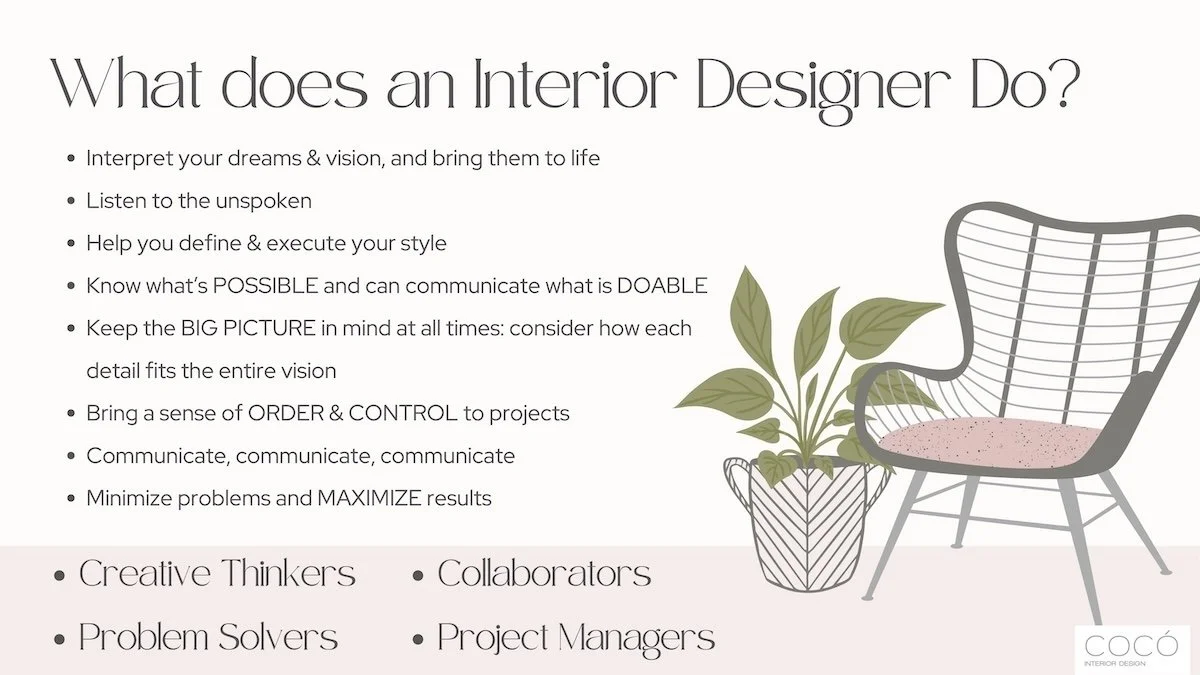
Either way, the work goes much deeper than selecting beautiful things. At full service, a designer develops your floor plan and contributes ideas to it before drawings are finalized, sources and specifies every finish and material, coordinates between your contractor and architect, manages the design budget, and keeps the overall vision intact from the first conversation through the last installation.
But designers can also work in smaller, more focused ways: a single room, a consultation on a kitchen layout, a set of plans you then execute yourself. The scope is flexible. What stays consistent is the value of having someone who can see the whole picture before the decisions get made, and who has done this enough times to protect you from the ones that cost the most to undo.
When to Hire an Interior Designer: Why Earlier Always Wins
I have changed more approved architectural plans than I can count. Let me tell you about one of them.
A family came to me for a full gut renovation of their forever home. The city had already approved their floor plans. When I looked at the drawings, I noticed their planned storage space sat in an awkward spot off the master suite. It was not going to be used regularly and took up far too much valuable square footage without serving the family well.
After studying the plans, I saw the opportunity. By relocating their master closet into that annex space and combining the closet area the architect originally proposed with the small laundry room beside it, we could create something genuinely special. The result was a large multi-purpose room: laundry, mudroom, crafting area, a dedicated desk space, and serious storage, all in one cohesive and beautiful room.
Additionally, the clients were first-generation Cuban Americans who had always loved Cuban tile but could not find the right place for it anywhere else in their open floor plan. This room became that place, just enough to make an impact without competing with the rest of the house, which made it more special. It is one of their favorite spaces.
Going back through city approval after the plans had already been stamped added time. We did it anyway, because getting it right was worth more than getting it fast.
That story is one version of something I see constantly. Clients come in with something they want, something they have seen and fallen in love with, and they have no idea that what looks like a purely decorative choice is actually a construction decision that needed to be made months earlier.


Dream List Items That Need More Planning Than You Think...
The secret door to a room requires a completely different way of framing the opening. Hidden storage built into a wall has to be framed for it. A medicine cabinet with integrated lighting has to fit within the depth of the wall, be framed to support the weight, and have electrical planned from the start. A library wall with beautiful custom lighting is stunning until you realize the switch location was never accounted for, or that the panel does not have enough capacity to support it. Pendant lighting over an island requires the ceiling to be wired for it.
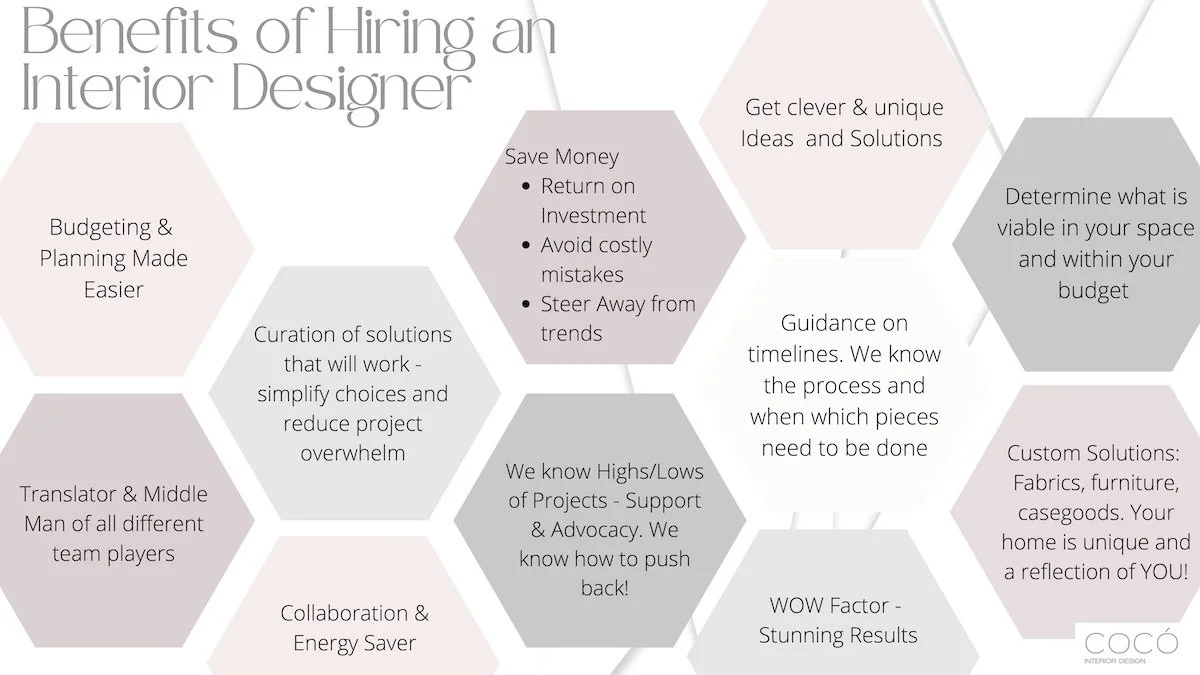
None of these things are impossible. All of them are significantly harder, more expensive, and sometimes simply not doable if a designer is not in the conversation before your contractor and electrician complete their rough-in work. The real cost of bringing someone in too late can be expensive re-work that could have been entirely avoided, or features you simply cannot have anymore because the walls are already closed.
How Much Does an Interior Designer Cost? Fee Structures Explained
Design fees vary depending on the designer and the scope of work. The most common approaches are an hourly rate, a flat project fee, a percentage of overall project costs, or some combination. Some designers also work with a markup on purchases or share trade discounts transparently with clients. None of these is inherently better than another. What matters is that you understand the structure before you sign anything, and that your contract spells out scope of work, deliverables, the payment schedule, the approval process, and what happens if things change mid-project.
Worth knowing: you do not always need to hire a designer for a full project. A kitchen or bathroom especially, where plumbing, electrical, and permitting all intersect, can benefit enormously from even a single focused conversation early on. Sometimes that one session changes everything.
What Makes a Great Client-Designer Relationship
The clients who get the most out of working with a designer value expertise and are willing to be guided by it. They communicate openly about how their family actually lives. They make decisions and commit to them. And they trust the process even when it feels slow, because the planning work done before anything is purchased is what makes execution go smoothly.
A good designer will ask you things nobody else has asked about your home. Your daily routines. How your kids move through the house after school. Where things actually land when you walk in the door versus where you wish they did. Whether you want two showerheads in the master because you and your partner like to shower together. We learn the intimate rhythms of your household in ways that go well beyond paint colors. Answer honestly. The more we understand how you actually live, the better the result.
Renovations bring out strong feelings, and partners don't always agree. Having a designer in the room means having someone whose only job is to hold the vision steady. Genuinely like the person you hire. Personality fit matters as much as portfolio.
How to Choose an Interior Designer: What to Look For and Ask
Look at their portfolio with an eye toward whether they have range or a signature style, and decide which you want. Read testimonials not just for results but for how clients describe the experience. Ask for referrals and actually call them. In your first meeting, pay attention to whether they listen. Can they reflect back what you told them about your family and how you live?
That first meeting should give you a clear picture of how the designer works, how they structure their fees, a realistic sense of timeline, and defined next steps. Go in with specific questions about their process, their approval system, what your weekly time commitment will look like, and what their contract covers. A designer who has done this well before can answer all of it clearly and without hesitation. That ease is itself useful information.
The last post in this series covers the finances of renovating: budgets, contingencies, and the honest conversation about cost that most people wish they had much earlier in the process.
This is Part 3 of a four-part renovation series. Part 1, Is Now the Right Time to Renovate, covers timing and Part 2: You’ve Decided to Renovate. Now What? covers prepartion.
My free No-Fail 10-Step Home Design Checklist is a good place to begin if you are still in the early stages.
And if you want the deeper framework before any design decisions get made, my ebook The Real Reset builds on exactly that foundation.